
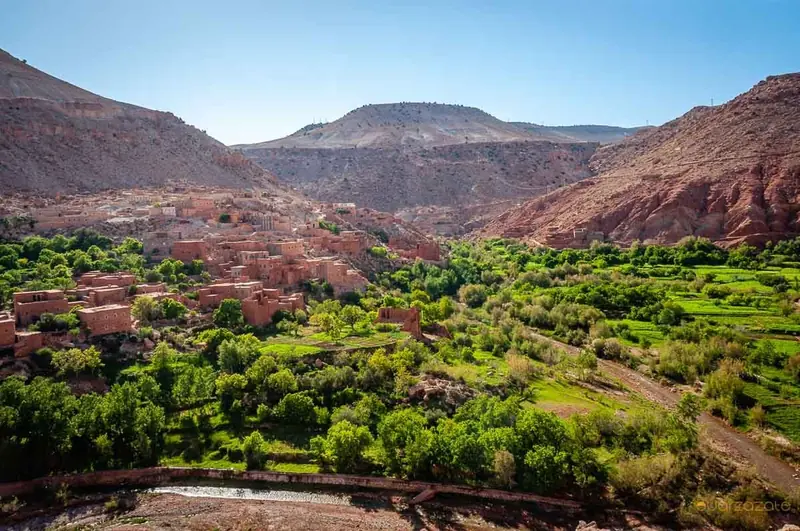
The slow road worth taking
Most traffic between Marrakech and Ouarzazate takes the N9. The secondary road P1506 is the alternative: it leaves the Tizi n Tichka pass and follows the Ounila river down to Ait Ben Haddou, where the Ounila joins the Imini. It takes longer, but the scenery and the places along the way make up for it.
For centuries this valley was a passage for caravans carrying salt and Saharan goods to Marrakech on journeys of several weeks. The villages along the river are home to welcoming Amazigh communities.
What you pass along the valley
The road runs past green gardens and rock in surprising colours, with four landmarks most travellers plan their stops around:
- Telouet Kasbah, the Glaoui palace with painted cedar ceilings.
- The Kasbah of Anemiter.
- Tamdaght Kasbah.
- Ait Ben Haddou, the UNESCO listed ksar at the foot of the valley.
How to travel the Ounila Valley
Buses and shared taxis between Marrakech and Ouarzazate use the faster N9, so you need a car or an organised trip to drive the P1506. Some agencies run day trips that visit Ait Ben Haddou, continue up the valley and return by the N9, and many Marrakech to Ait Ben Haddou excursions include it. Routes and services change, so check locally.
Where to stay in the valley
Standard hotels are rare once you cross the High Atlas outside the larger towns. Instead you will find affordable guest houses and kasbahs, each with its own character. Tourism matters to local families, so hosts take good care of guests, and High Atlas cooking has a reputation for some of the best tagine in Morocco.
Questions and answers
Which road goes through the Ounila Valley?
The secondary road P1506, which links the Tizi n Tichka pass to Ait Ben Haddou.
Can I see the Ounila Valley by bus?
No. Buses and shared taxis between Marrakech and Ouarzazate take the N9. Drive yourself or join an organised trip.
What are the main sights in the valley?
Telouet Kasbah, the Kasbah of Anemiter, Tamdaght Kasbah and Ait Ben Haddou.

Read before you go
More places nearby
All destinations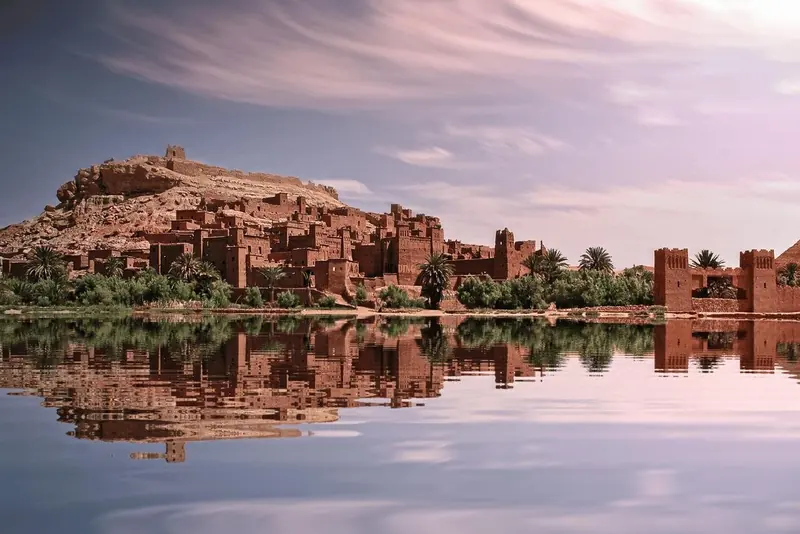
Ait Ben Haddou
A fortified village of packed earth from the seventeenth century, on the old caravan road and on the UNESCO World Heritage List since 1987. Thirty kilometres from Ouarzazate.

Telouet Kasbah
A weathered earthen palace from 1860 in the High Atlas, home of the Glaoui family, with painted cedar ceilings and Andalusian style rooms behind its crumbling walls.
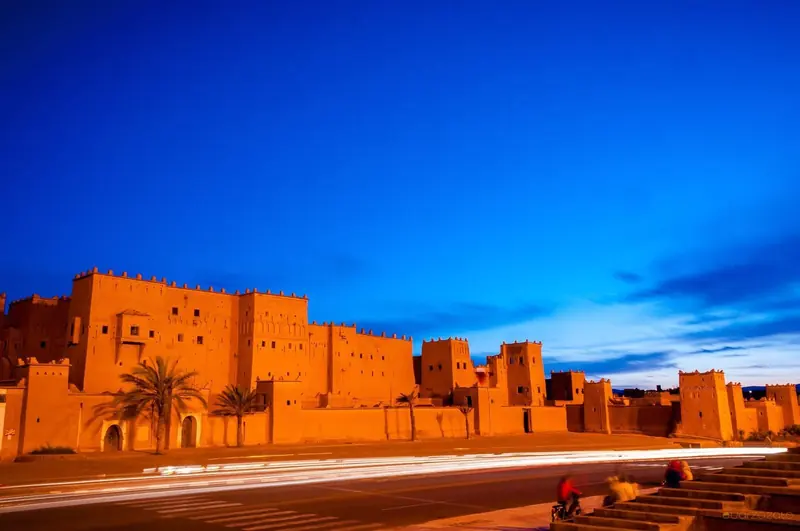
Taourirt Kasbah
The kasbah at the heart of Ouarzazate, a former Glaoui residence on Boulevard Mohamed V with Amazigh patterns outside and carved cedar, painted walls and zellige inside.